Artificial Turf Pitch Renovation: From Removal to Handover
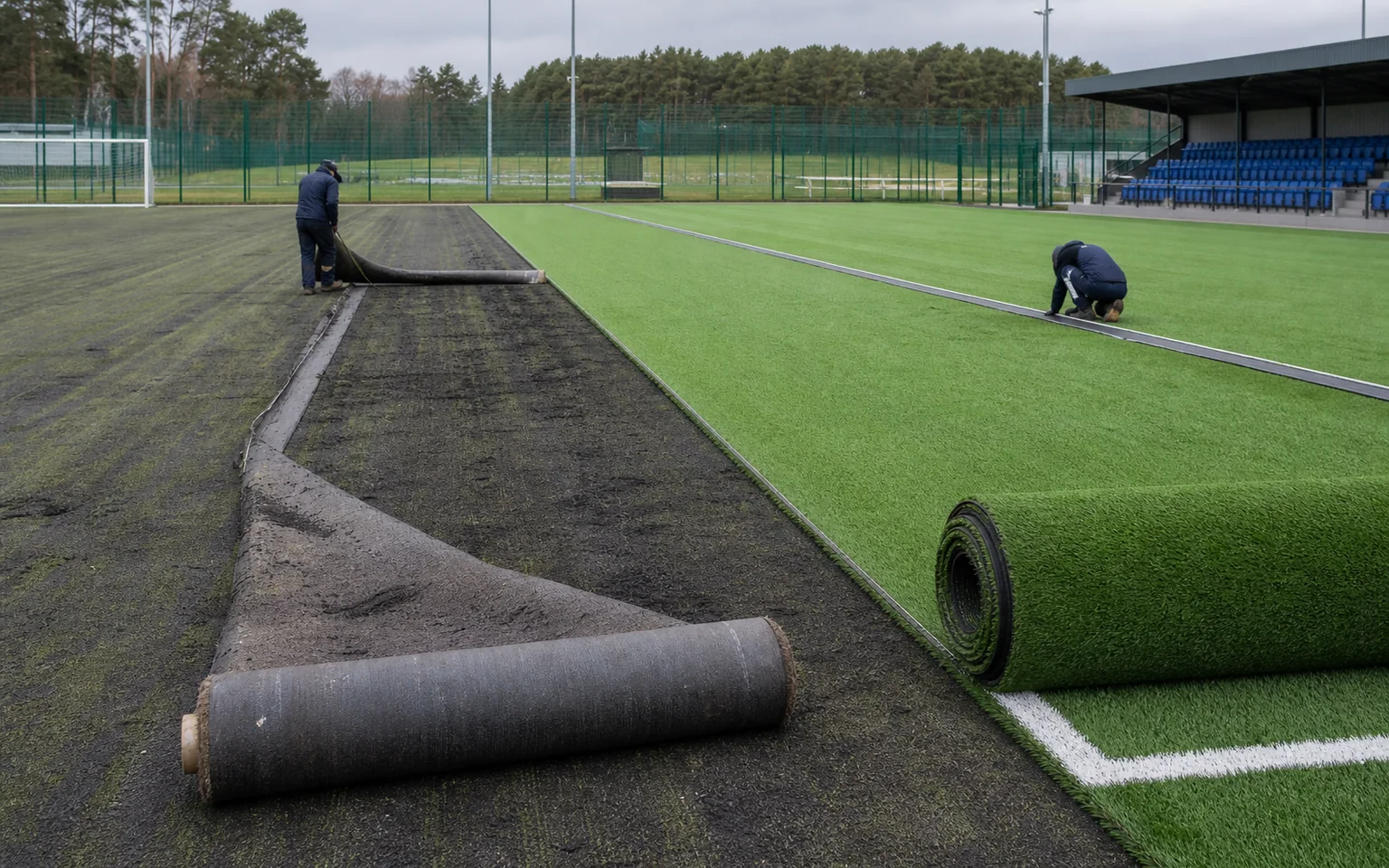
Replacing the carpet alone may not solve the field problem. Plan the existing system, drainage, base, infill, waste route and new-field acceptance together.
An artificial turf renovation is more than removing old rolls and installing new ones. Open seams, fibre wear, infill loss, ponding and uneven levels can have different root causes. Inspect the existing playing surface and infrastructure first, then compare local repair, partial renewal and full replacement on one decision sheet.
Use the artificial turf maintenance calendar to extend service life and the drainage and sub-base guide when investigating infrastructure.
1. Repair, partial renewal or full replacement?
Local seam work or infill correction may suit a field with limited defects and functioning infrastructure. Partial replacement can address high-wear goalmouths or central corridors, but colour, fibre construction, seam layout and remaining service life must be compatible. Widespread fibre loss, multiple seam failures, permanent deformation or infrastructure defects may support full renewal. Age alone is not the decision.
2. Prepare an existing-condition report
Record dimensions, use, weekly hours, installation year, product information, maintenance and previous repairs. Inspect fibre condition, seams, lines, perimeters, infill level, surface regularity, drainage, shockpad and accessible base areas. Link numbered photographs to a plan and distinguish observation from measured results.
3. Plan quantities and handling before removal
Estimate carpet, sand, performance infill, shockpad and accessories separately. Mixing materials during removal may reduce reuse or recovery options. Define rolling or cutting, temporary storage, bags, loading, weighing and transport before pricing. Confirm equipment access and protect adjacent assets.
4. Verify reuse and waste claims
Old carpet or infill should not automatically be treated as recyclable. Confirm composition, contamination, separation, local facility acceptance, transport and documentation. Reuse needs technical and hygiene suitability; recycling needs a real receiving route and traceable handover. See the end-of-use and recycling guide.
5. Hold a second inspection after removal
Settlement, cracks, drainage marks, shockpad damage and soft areas may become visible only after the carpet is removed. The quotation should state initial assumptions, a joint post-removal inspection, acceptance record and pricing rule for additional repairs. Do not cover the base with the new rolls before corrective works are approved.
6. Close drainage and base issues first
New turf cannot remove the effect of poor falls or blocked outlets. Check levels, regularity, channels, collectors, outlets and permeable layers against the project requirement. A ponding map after rainfall can provide useful evidence. Price corrections separately with quantities, materials, compaction and acceptance records.
7. Specify the new surface as a system
Professional football, training, schools and commercial small-sided pitches do not share one performance target. Define product code, fibre, backing, roll dimensions, seam materials, lines, sand, performance infill, shockpad and equipment as one system. The sample, technical sheet and delivery label should identify the same current product.
8. Coordinate roll plan and phasing
Net pitch area, order quantity and waste are different figures. Roll direction, seams, line cuts, perimeter details and storage affect both material quantity and closure time. If partial operation is proposed, safe separation, temporary access and equipment routes must be solved before promising a phased opening.
9. Record infill management
Validate the separation, cleaning and reuse of existing infill for each project. For the new system, define material type, grading, target quantity, layered installation, brushing and final-level records. Too little, too much or uneven infill can change surface behaviour. Follow the selected system and current manufacturer instructions.
10. Define testing and certification correctly
A product laboratory report, a system test and a completed-pitch field test are different evidence. If a FIFA quality mark is a target, verify the current programme, licensed product system, installation records and accredited field-test requirements at project start. A certificate for the old field is not automatic evidence for the new installation; the renewed pitch needs its own current evaluation.
11. Expose programme and commercial risks
- Closure date, tournament and rental commitments
- Removal, base corrections, delivery, installation and testing milestones
- Weather, storage, lifting equipment and internal access
- Customs, container, unloading and packaging responsibilities
- Latent defects, variations, delay and remobilisation rules
- Waste records, as-built file, maintenance training and warranty start
Minimum RFQ data pack
- Measured plan, current photographs and defect map
- Use level, hours, target opening and testing requirement
- Existing product, infill, shockpad, drainage and maintenance data
- Preferred reuse or waste route for removed materials
- Responsibility and acceptance method for base corrections
- Delivery, unloading, storage and site-safety responsibilities
Send the field data through the RHB Group contact page to request comparable repair, partial-renewal and replacement scopes.
Frequently asked questions
Does age alone determine replacement?
No. Use, maintenance, fibres, seams, infill, drainage and base condition must be considered together.
Can old infill always be reused?
No. Composition, contamination, system compatibility and acceptance requirements must be verified.
Does a product report certify the completed pitch?
No. Product evidence and the final field assessment are separate stages.