How to Choose a Football Tactics Board: A Club Purchasing Checklist
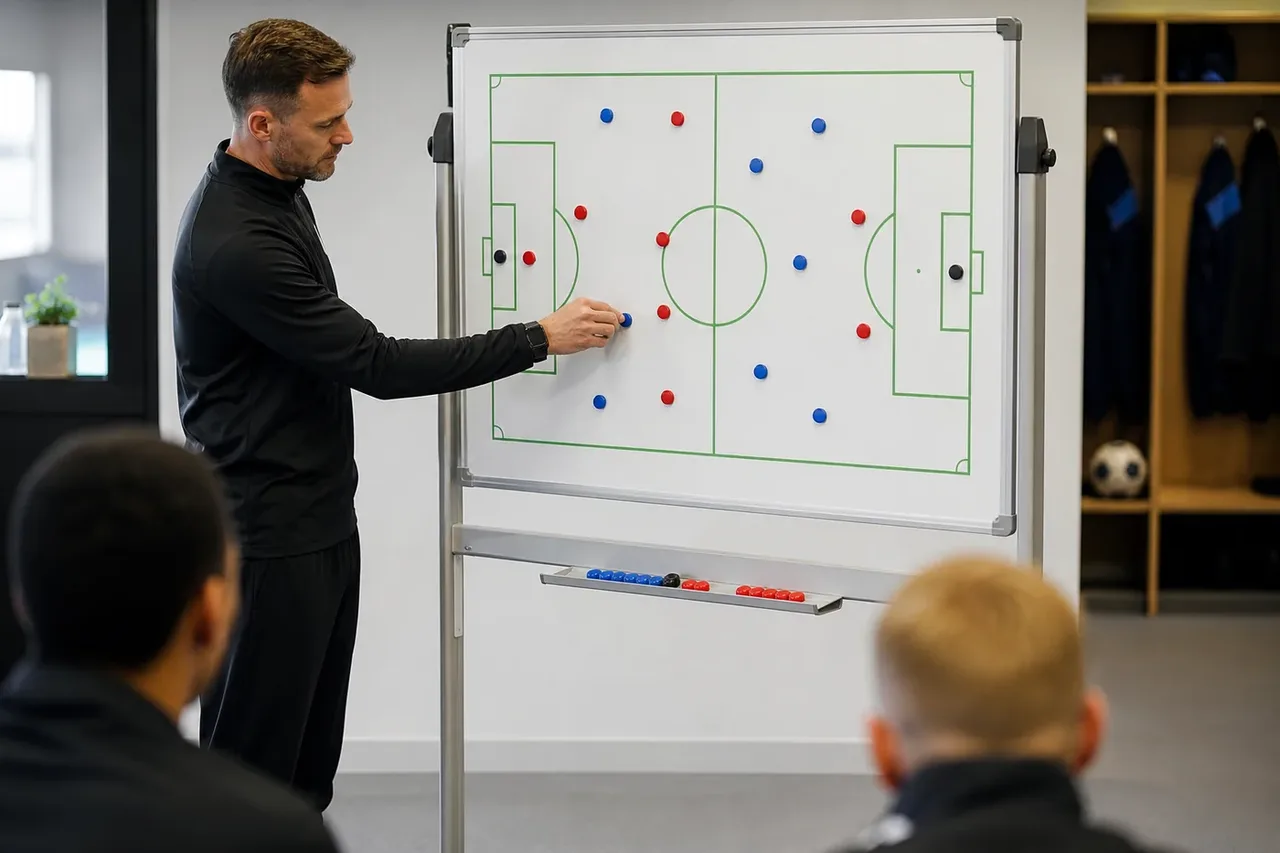
Compare use case, visibility, portability and included accessories before selecting a football tactics board for your club or academy.
When choosing a football tactics board, start with “Where and with whom will we use it?” rather than dimensions alone. A team briefing in a changing room, a small-group training session and a short discussion during an away trip have different requirements.
Clubs, academies and facilities can use this checklist to prepare a quotation request. Do not assume that every model includes the features mentioned below. Confirm them in the quotation and product documentation.
1. Define the location and audience
Specify whether the board will remain in one room or move between locations. State how many people need to see the diagram and the viewing distance. A board for a large group and a handheld coaching board should not be compared on price alone.
For outdoor use, ask whether the selected product is suitable. Do not assume that an indoor product is designed for outdoor conditions.
2. Separate writing area from overall dimensions
Check whether the quoted dimensions refer to the usable surface or include the frame. Overall dimensions matter for storage and transport; the writing area matters for presentations. Request a photograph or sample demonstrating visibility at the intended distance.
Consider the pitch layout, line visibility and space for notes together. Select a layout that suits the coaching team's workflow.
3. Confirm the writing and marking method
If magnetic markers or dry-erase pens are required, obtain written confirmation that the selected model supports them. Request instructions for compatible pens and cleaning. The term “tactics board” does not guarantee identical surfaces or accessory sets.
List numbered markers, pens and erasers separately in the quotation so that included and excluded items are clear.
4. Define mounting, transport and storage
Specify wall-mounted, freestanding or portable use. Ask whether fixings, a carry case or a stand are included. If installation is required, agree responsibilities at quotation stage and retain the operating and safety instructions.
5. Compare quotations on the same scope
Send each supplier the same brief: location, quantity, dimensions, surface requirements, accessories and delivery destination. Separate product, accessory, installation and transport costs where applicable. Use written quotation terms for warranty and delivery timing rather than general marketing statements.
For international delivery, clarify the destination and delivery responsibilities. Similar unit prices do not necessarily include the same scope.
Receiving inspection
Check the product/model and quantity, visible surface and frame condition, ordered accessories and any installation instructions. Record shortages or damage with photographs and a delivery record. Do not rely solely on the product name on the packaging.
Frequently asked questions
Which size should we choose?
There is no single universal size. Consider audience size, viewing distance, transport and storage. Ask for both overall and usable surface dimensions.
Is every board magnetic?
Do not assume so. The magnetic surface and compatible markers should be explicitly confirmed in the product documentation or quotation.
What information is needed for a quotation?
Provide the use case, quantity, preferred dimensions, accessory requirements and delivery city/country.
Next step: Share your requirements with RHB Group. Technical features and delivery terms must be confirmed for the selected product and quotation.