12 Key Factors That Determine Football Turf Construction Cost
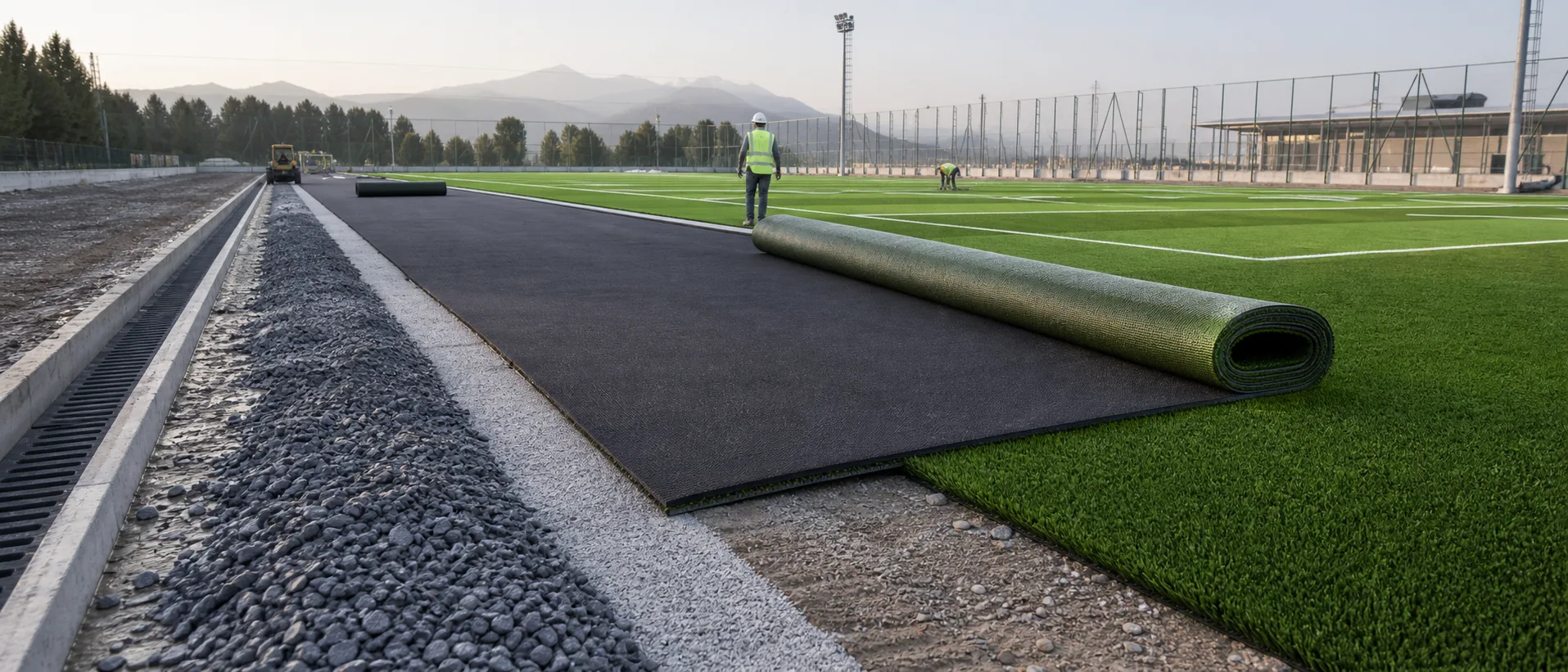
Ground conditions, drainage, turf system, infill, lighting and installation quality collectively determine the total football pitch budget.
Budgeting a synthetic-turf football pitch by a single “price per square metre” can be misleading. Two fields of identical size may require very different investment levels because of ground conditions, usage intensity, turf specifications, infrastructure and equipment. A reliable estimate must cover both the visible playing surface and the engineered layers beneath it.
This guide explains the 12 principal cost drivers and the questions that should be asked when comparing contractor quotations.
Why is there no single football pitch price?
The complete investment combines design, earthworks, drainage, structural sub-base, synthetic turf, infill, perimeter safety, lighting, sports equipment, labour and logistics. Omitting a component may reduce the initial quotation while creating variations, delays or premature maintenance costs during operation.
1. Pitch dimensions and intended use
A mini-football field, commercial five-a-side venue, school playground and professional training pitch do not share identical requirements. Turf, infill and groundwork quantities rise with the net area, while safety run-offs, goal clearances and service zones must also be included.
2. Site and soil conditions
Sloping, loose, filled or poorly drained land can require additional excavation, filling and compaction. A refurbishment over a suitable asphalt or concrete base has a different cost structure from a new-build field. A level survey and site inspection before pricing substantially reduce unforeseen work.
3. Drainage design
Rapid removal of rainwater is essential for availability and long-term stability. Perimeter channels, drainage pipes, geotextile layers and engineered falls must be evaluated as one system. Insufficient drainage can cause standing water, settlement and surface deformation.
4. Structural sub-base
Aggregate grading, layer thickness and compaction affect both cost and performance. The sub-base distributes loads, supports drainage and keeps the playing system stable. Quotations should identify the proposed layers, thicknesses and compaction method rather than using a generic groundwork allowance.
5. Synthetic turf specification
Pile height alone does not define quality. Yarn type, dtex, stitch density, backing, UV stability, fibre recovery and the intended usage class should be considered together. Heavy commercial use typically prioritises durability, while schools and multi-use areas may need a different performance balance.
6. Infill type and quantity
Silica sand and elastic or organic performance infills influence ball behaviour, impact response, surface temperature and maintenance. SBR, EPDM, TPE, cork and other organic options should be compared on performance and lifecycle requirements—not purchase price alone.
7. Shockpad and performance layers
An elastic shockpad may be installed beneath the turf when the performance target requires it. It can improve impact absorption and system consistency. Thickness, density and drainage compatibility must be verified with the selected turf rather than specified independently.
8. Steelwork and perimeter safety
Post sections, galvanising, overhead netting, fence height, gates, connections and wind-load design represent a significant share of the budget. Pipe diameter is not enough for comparison; wall thickness, fixing details and corrosion protection also matter.
9. Sports lighting
Luminaire efficiency, light distribution, glare control, pole positions and electrical infrastructure matter as much as the number of floodlights. A proper lighting study delivers balanced visibility while limiting unnecessary energy use. Target illumination and luminaire data should be included in the proposal.
10. Sports equipment and accessories
Goals, team shelters, protective padding, nets, gates and wayfinding should be included. Commercial venues may also require changing facilities, access control, CCTV or booking infrastructure, which should be priced as separate but coordinated systems.
11. Labour, logistics and site access
Transport distance, lifting equipment, restricted access and the construction programme all influence installation cost. Dense urban locations, remote sites and limited working hours require a logistics plan before the final price is agreed.
12. Warranty, maintenance and lifecycle
The lowest initial price is not always the lowest total cost. Brushing, infill management, seam inspection and periodic professional maintenance preserve performance. Product warranty, installation responsibility, spare-material availability and the maintenance plan should therefore be assessed alongside capital cost.
Questions to ask when comparing quotations
- Which exact pitch dimensions and total construction area are included?
- Are sub-base layers, thicknesses and drainage components itemised?
- Is the turf specification linked to the intended usage level?
- Are infill quantity and optional shockpad clearly stated?
- Are lighting, steelwork, equipment and electrical works included?
- Are transport, installation, commissioning, warranty and maintenance terms clear?
How should a dependable budget be prepared?
The most reliable approach starts with site data, intended usage, field dimensions and performance expectations. Alternative systems can then be compared on an identical scope, allowing the investor to understand the balance between capital and operating cost.
RHB Group evaluates the field as a complete system—from ground assessment and drainage to turf, lighting and sports equipment. For a transparent, project-specific technical proposal, contact our team.
Connect project cost to the per-m² quotation scope
Once the field cost drivers are known, move net area, order waste, product, installation, logistics and acceptance into the bid schedule. Follow the artificial turf price-per-m² calculation guide.