How to Choose Artificial Turf for a Professional Football Pitch
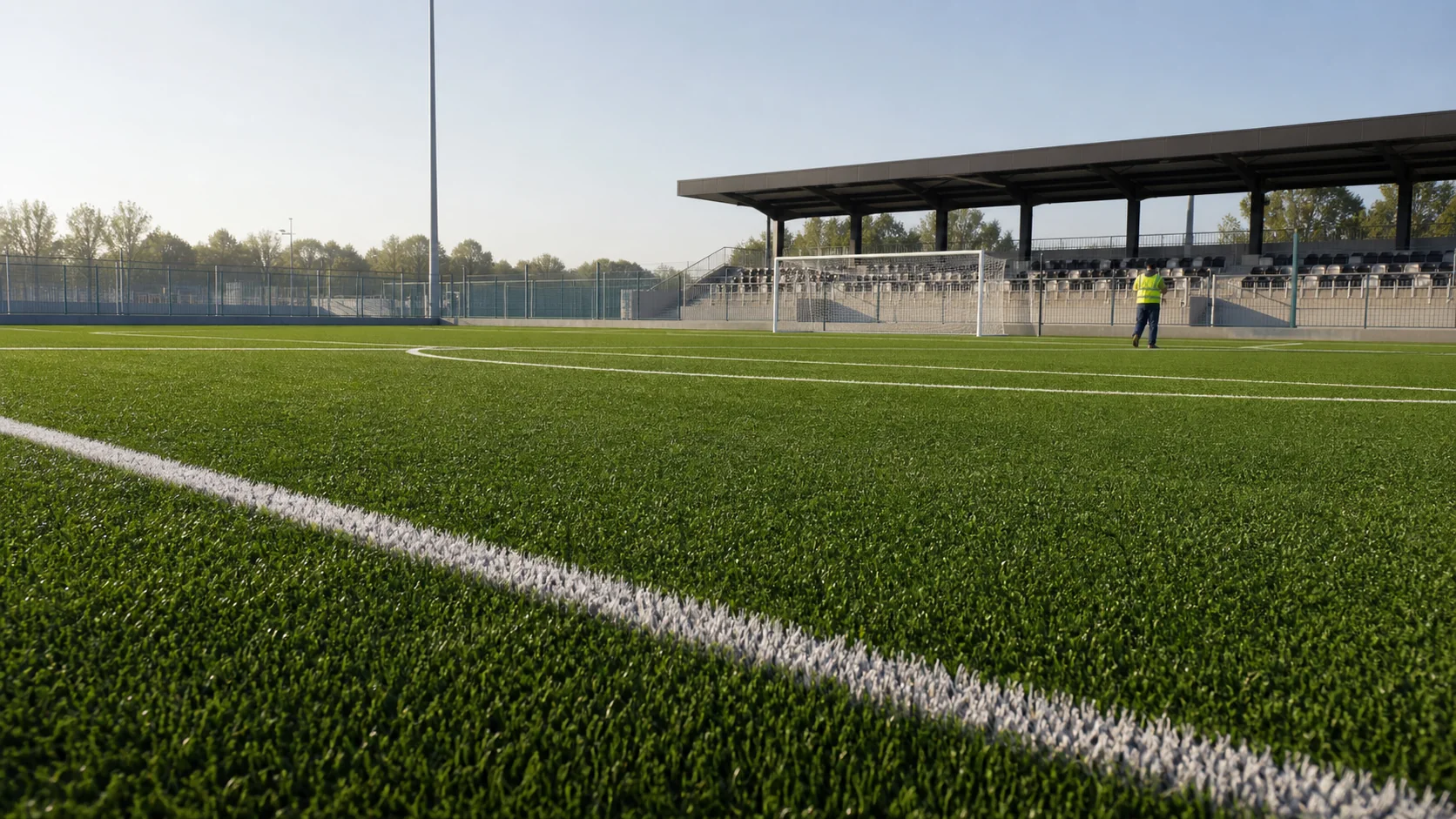
Compare fibre, density, backing, infill, shockpad, climate and maintenance requirements as one complete football pitch system.
Artificial turf for a football pitch should never be selected by pile height or square-metre price alone. Playing performance, annual usage, climate, maintenance capacity and the sub-base must be reviewed together. A technically strong product may still underperform if it is installed as part of an unsuitable system.
Define the operating scenario first
A professional training ground, commercial five-a-side pitch, school field and municipal facility do not carry the same load. Record weekly playing hours, player profile, other activities planned on the surface and the maintenance resources available. These inputs establish the correct product and system class.
Read technical values as a group
| Criterion | What it affects | What to verify |
|---|---|---|
| Fibre structure | Recovery and wear behaviour | Monofilament, fibrillated or hybrid |
| Dtex and mass | Density and durability balance | Review together with stitch rate |
| Backing | Dimensional stability and seams | Coating, drainage holes and bond |
| UV resistance | Colour and mechanical retention | Test evidence relevant to the climate |
A higher figure is not automatically a better product. A dense carpet with poor fibre recovery can flatten quickly under heavy use. Technical data should therefore be checked against a physical sample and, where required, system performance reports.
Infill and shockpad are part of the turf system
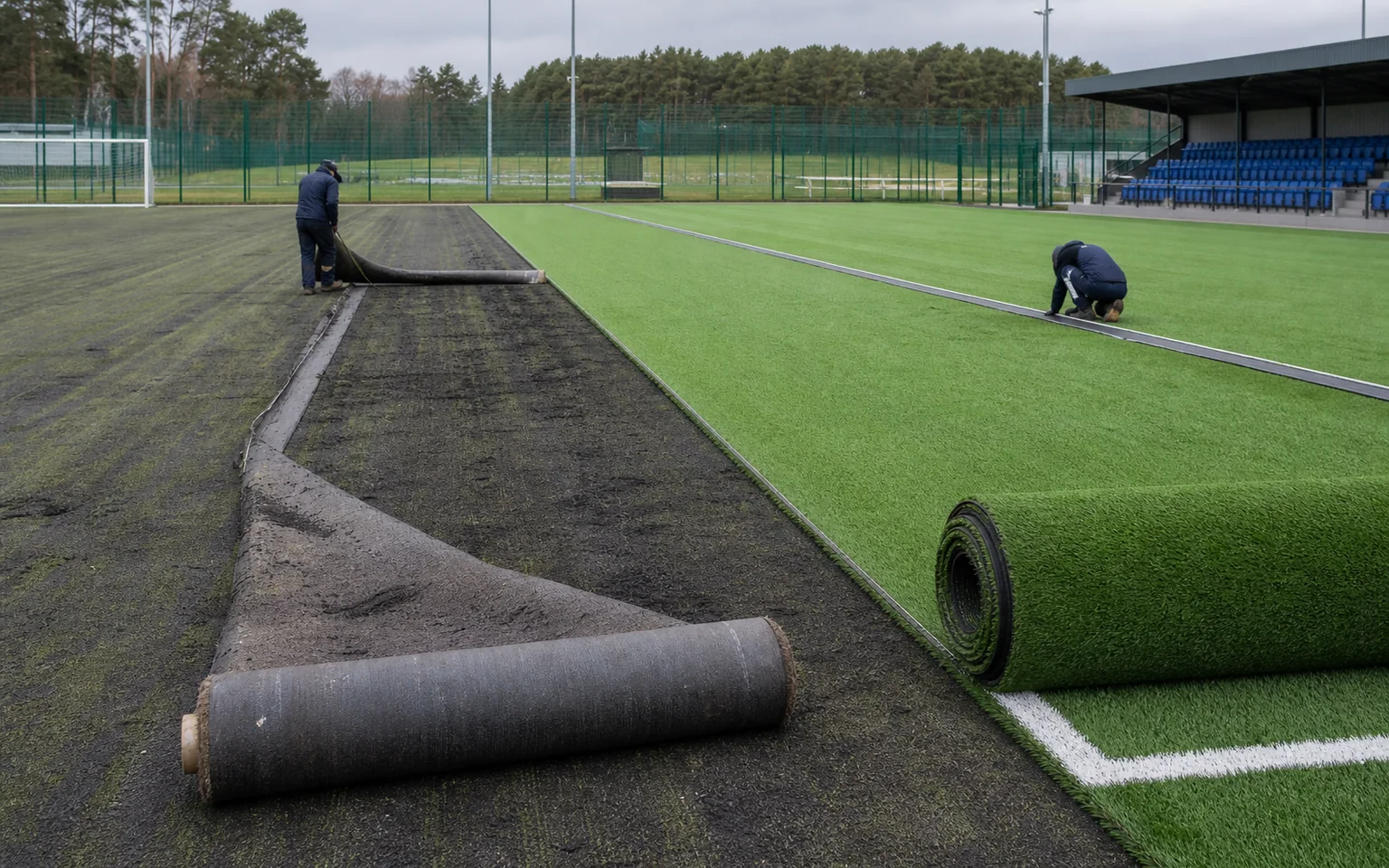
Silica sand, performance infill and shockpad influence ball roll, impact absorption, grip and surface temperature. They should be designed with the selected turf rather than added later as independent commodities. Drainage must also be verified across all layers.
Match the system to climate and maintenance
High heat and UV exposure in the Gulf require different priorities from a high-rainfall site in Türkiye. Dusty locations need appropriate brushing and cleaning equipment; wet climates demand greater attention to the sub-base and discharge route. A high-maintenance system is an operational risk when no trained team or machinery is available.
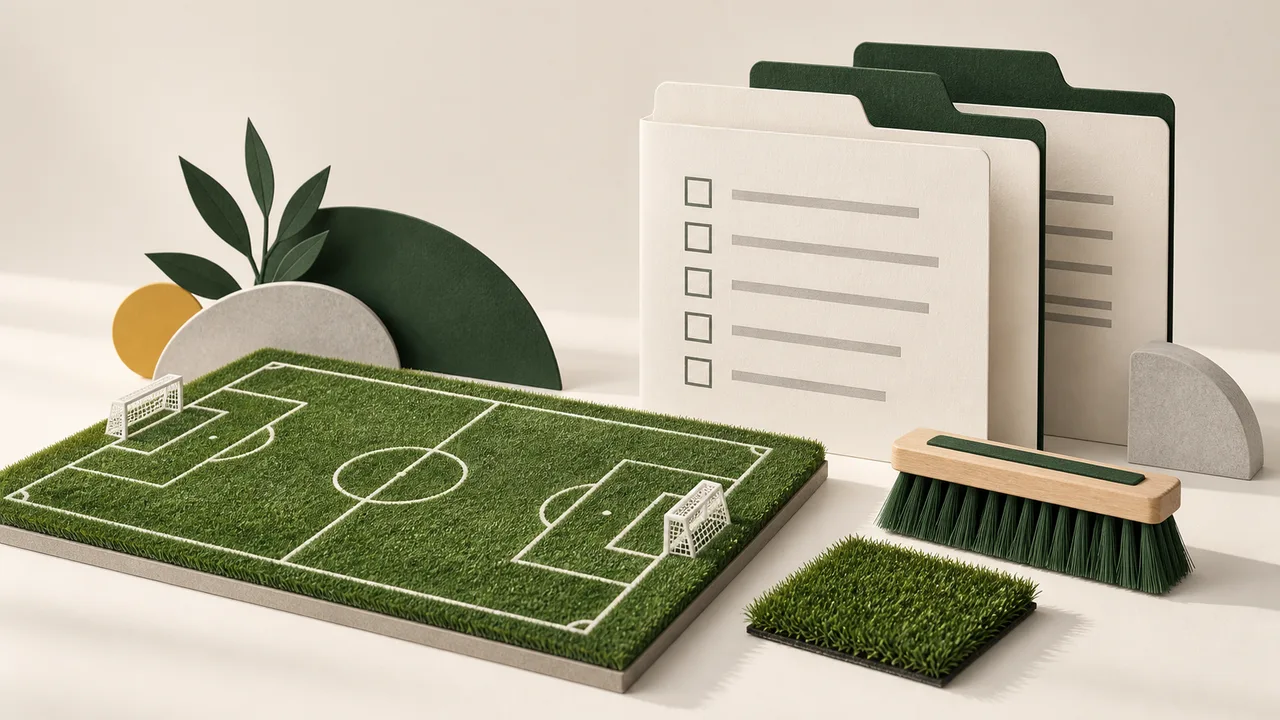
Information to request with every offer
- Full product data sheet and representative sample
- Recommended sand and performance infill quantities
- Shockpad thickness, density and drainage data where applicable
- Seaming tape and adhesive system
- UV, wear and relevant performance reports
- Warranty scope, exclusions and maintenance conditions
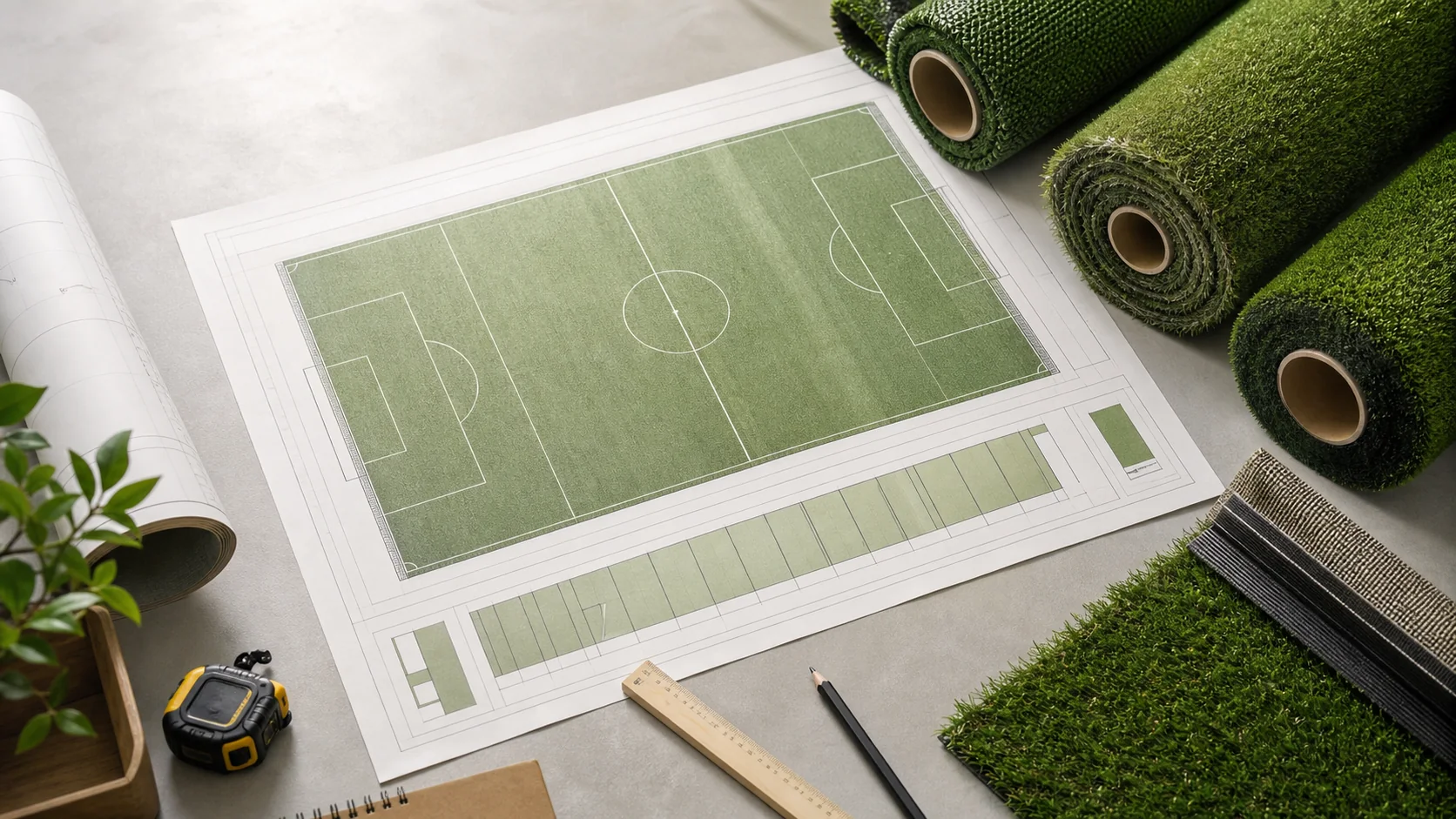
- Roll plan, expected waste and spare material quantities
RHB Group evaluates turf together with the sub-base, drainage, infill, equipment and maintenance plan. Explore our product systems or share your project data for a technical comparison.