Industrial Chemical Quotation and Supplier Evaluation Checklist

Two chemical offers with the same unit price may carry different total risk because of specification, method, packaging, remaining shelf life and acceptance evidence.
Industrial chemical procurement should not be reduced to product name, purity and price per kilogram. The same commercial name may cover different specifications, test methods, packaging, manufacturing sites, shelf life and delivery scope. A comparable quotation combines technical, quality, logistics and commercial fields in one evaluation schedule.
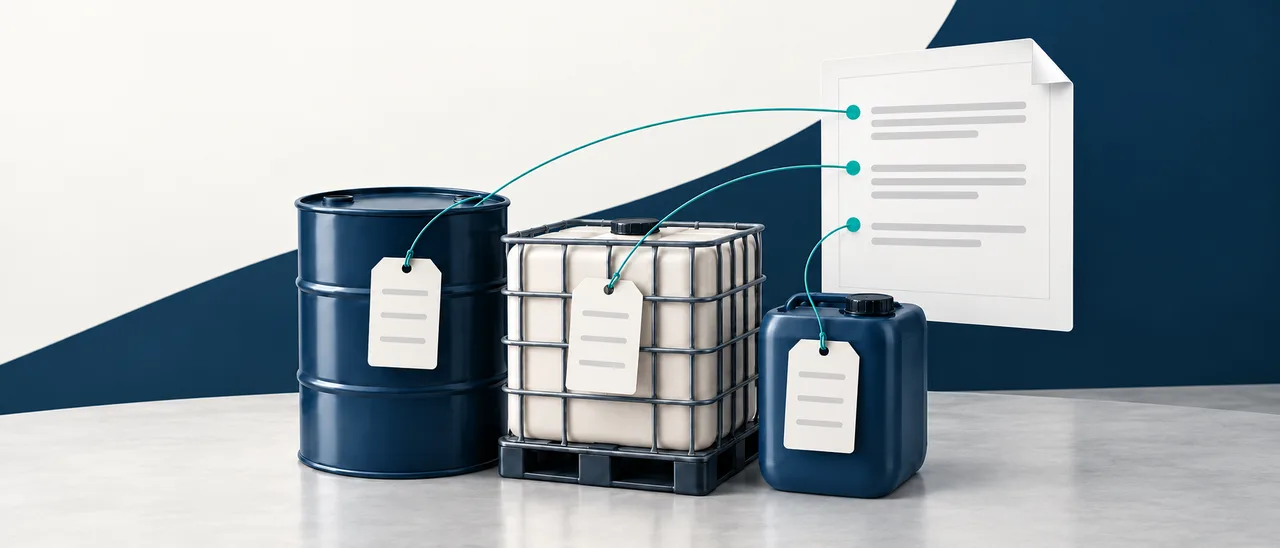
Start with the SDS, TDS and COA procurement guide to distinguish document roles. This is a general B2B framework; authorised specialists must verify classification, intended use and destination-market requirements.
1. Define the product by specification
State product and manufacturer codes, chemical identity or CAS information where appropriate, concentration, appearance, density, viscosity, pH, moisture, impurities and other critical attributes. Separate minimum, maximum and target values and identify the method. Results from different methods should not be treated as directly equivalent without technical review.
2. Share the intended use and critical quality attributes
The same raw material can behave differently in paint, adhesive, detergent or coating formulations. Communicate controlled information on process temperature, dosage, mixing sequence and effects on colour, odour, foam, cure or stability. A supplier recommendation does not replace laboratory and production validation.
3. Verify the supplier and manufacturing source
Identify whether the bidder is manufacturer, distributor or trader, which plant will supply the product and how source changes will be notified. Company registration, authorisation, quality certificates or an audit report alone do not constitute supplier approval. Verify authenticity, scope and validity together with complaint handling, traceability and delivery performance.
4. Separate samples and pilot work from the order
Record sample code, batch, date and associated technical file. Laboratory work should assess critical parameters and compatibility within the intended formulation. One successful small sample does not guarantee every commercial batch or process condition. Critical materials may require a pilot production gate and controlled change approval.
5. Connect SDS, TDS and COA to decisions
A current SDS supports safe handling, storage, exposure and transport planning; it is not a quality certificate. A TDS may describe typical performance, not every delivered batch. The COA should report results for a defined lot and match package markings. Check language, revision, manufacturer identity and methods against the purchase conditions.
6. Expose MOQ and price structure
Minimum quantity can be driven by production, pack size, pallet layout, container utilisation and dangerous-goods transport. Ask for sample, trial, standard MOQ and full-container tiers. Separate raw material, packaging, pallets, documents, analysis, inland haulage, freight, insurance, customs and unloading to compare scenarios.
7. Define packaging and labels
Drums, IBCs, bags or tankers should follow compatibility, quantity, handling and warehouse capability. State net and gross weight, material, closure, any required UN marking, pallet pattern and stacking limit. Verify product, lot, manufacture/expiry, quantity and required hazard communication for the destination market.
8. Distinguish shelf life from remaining life
Total shelf life does not show time lost before receipt. Define manufacture date, dispatch timing and minimum remaining life on arrival. Convert temperature, sunlight, moisture, freezing and ventilation constraints into transport and storage controls. The contract should explain how storage deviation and manufacturing defect will be investigated.
9. Read Incoterms with the named destination
FOB, CIF, CFR or DDP alone does not complete the scope. State port, terminal, customs, demurrage, dangerous-goods surcharge, inland delivery, appointment, lifting and unloading responsibility. Validate transport classification, packing group and documents using current product data and applicable transport rules.
10. Define receipt and nonconformance before ordering
Create checks for damage, seal, label, lot, quantity, temperature record, COA and incoming tests. Sampling and retained-sample periods may be contractual for critical materials. Define quarantine, investigation, retest, return, replacement and credit routes, owners and response times.
11. Calculate total cost of ownership
- Product and packaging cost
- Freight, insurance, customs, tax and port charges
- Storage, permits, PPE and handling
- Incoming tests, samples, audits and document control
- Shelf-life loss, safety stock and working capital
- Rejected lots, downtime and emergency substitution risk
Minimum RFQ data pack
- Product code, use and monthly/annual forecast
- Parameters, methods and acceptance limits
- Pack, named place and requested Incoterm
- Sample, pilot and commercial order schedule
- Required SDS, TDS, COA and traceability records
- Remaining shelf life, storage and receipt conditions
Share these inputs through the RHB Group contact page to request a technically and commercially aligned supply proposal.
Frequently asked questions
Is the lowest kilogram price the best offer?
Not always. Packaging, freight, shelf life, testing, waste, financing and nonconformance can alter total cost.
Does a successful sample approve the supplier?
No. Batch consistency, source, documentation, traceability and delivery performance also require review.
Does the COA replace incoming inspection?
It depends on risk; critical materials may require contractual incoming or independent verification.