RHB Fill Bio Cork
An alternative infill option assessed for the system and operating conditions of each synthetic-turf project.
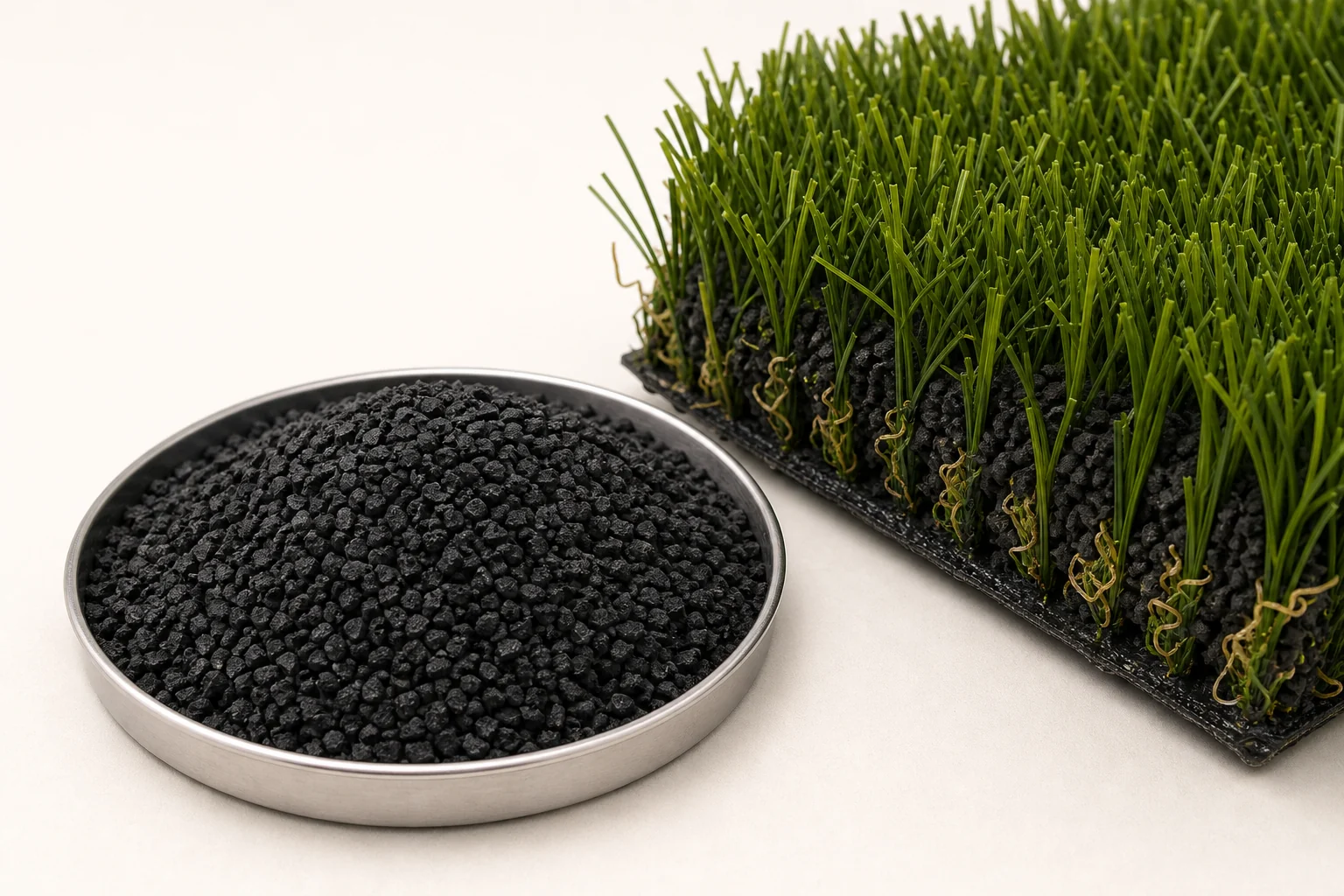
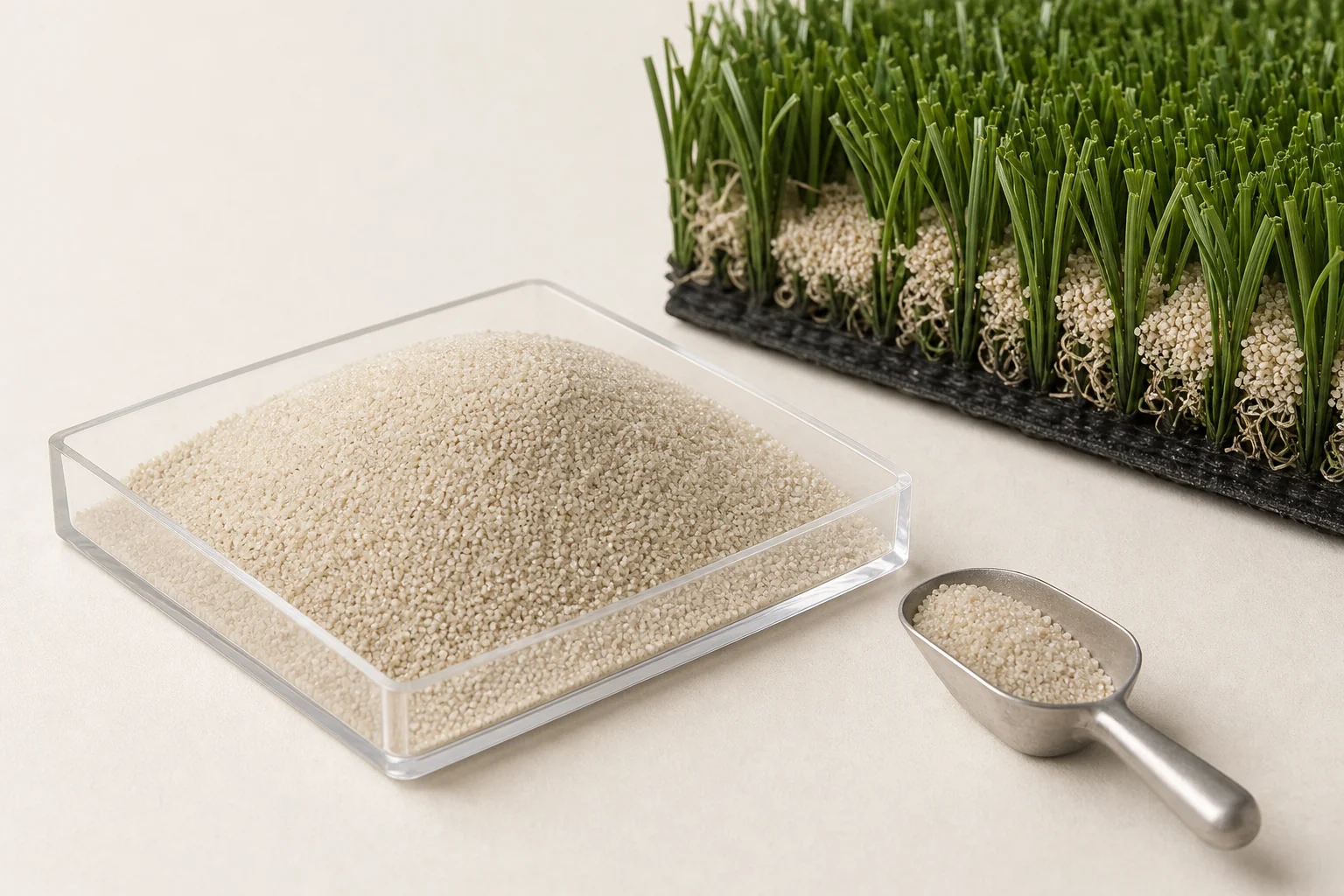
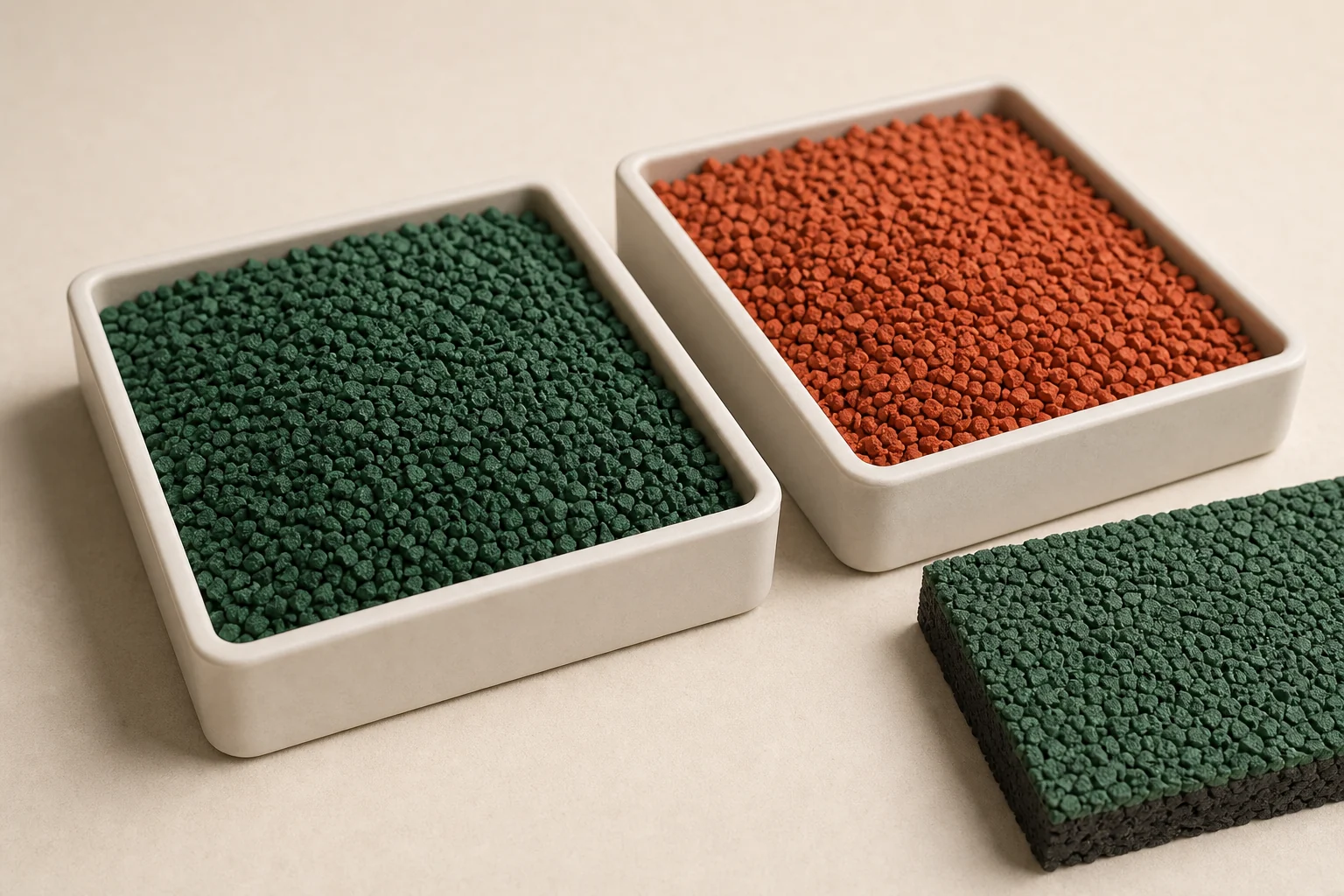
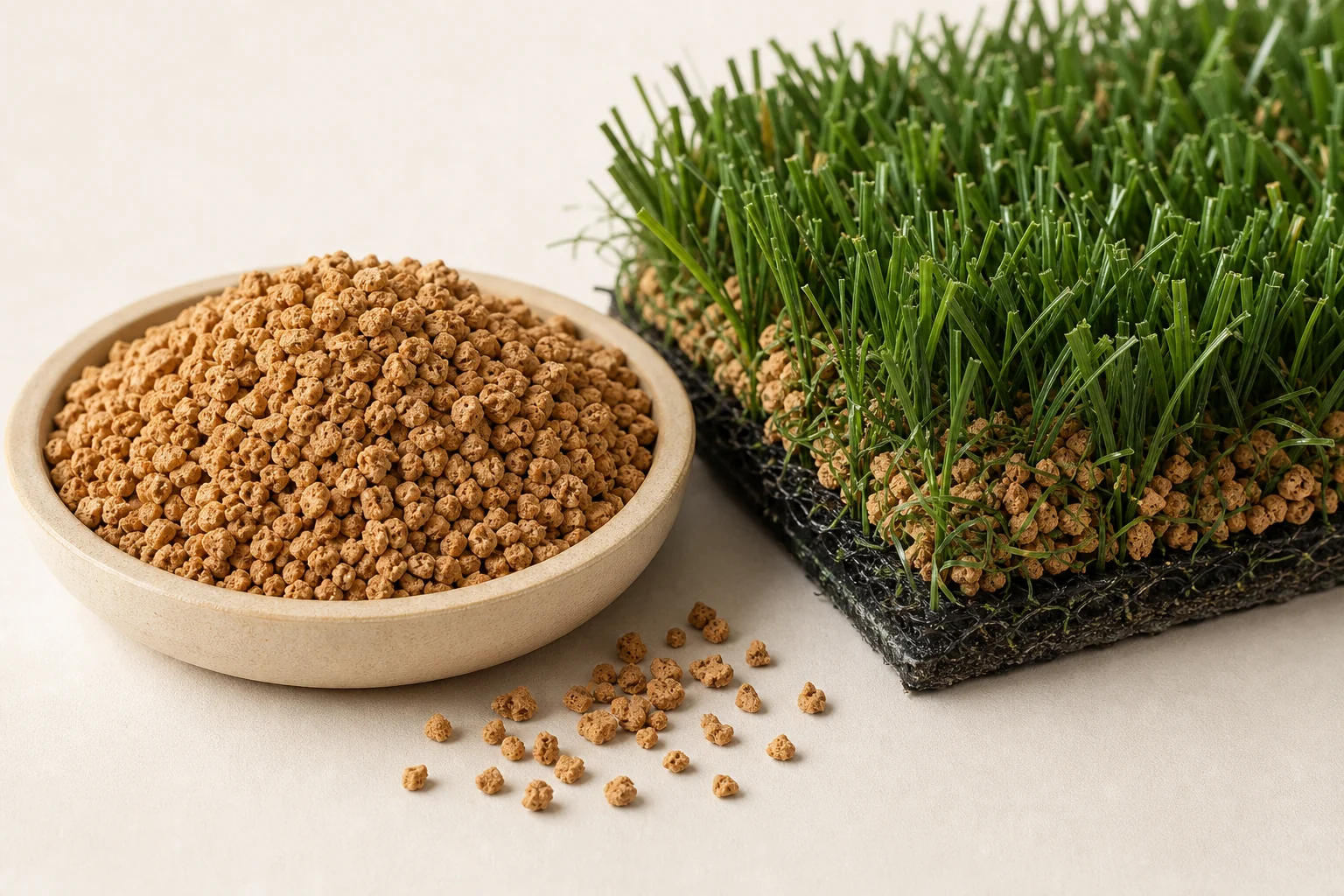
RHB Fill Bio Cork is a natural cork granule considered as an organic-based alternative performance infill for compatible synthetic-turf systems. Its porous, low-density structure behaves differently from SBR or EPDM; surface temperature, water retention and drainage response, floating or migration risk, wind exposure, wear, biological growth, periodic top-up and maintenance equipment therefore require project review. The product is not garden mulch or randomly shredded bark: it should be a field-infill material with controlled grading and documented product declarations. Compatibility, consumption and the maintenance plan are verified for the selected turf system and local climate conditions.
Product and project information
Infill selection considers field type, climate, use intensity and maintenance conditions.
An alternative infill approach
Cork-based infill is evaluated together with project objectives and maintenance conditions.
Cork-based structure
Considered for projects seeking an alternative infill.
Climate-aware selection
Local climate and field use form part of the selection.
System guidance
Suitability is reviewed with the turf and underlying layers.
Product and surface system questions
How are service life and warranty terms determined?
Service life depends on the selected product, usage intensity, climate, installation and maintenance. Request the written warranty duration and scope using the product code. This page does not promise a common service life or UV warranty for every product.
What evidence is needed for use in a children’s play area?
Suitability cannot be established from the turf appearance or product name alone. Intended use, the base, any impact-absorbing layer and infill must be assessed together. Request relevant test reports by product and system code; do not assume safety or compliance before the report scope is verified.
How is drainage assessed in wet conditions?
Drainage must be assessed using the selected surface’s water permeability together with the sub-base, slope and drainage outlets. Share the project location and existing base details to request the product datasheet and installation requirements. No universal promise of no ponding or a fixed drainage rate is made.