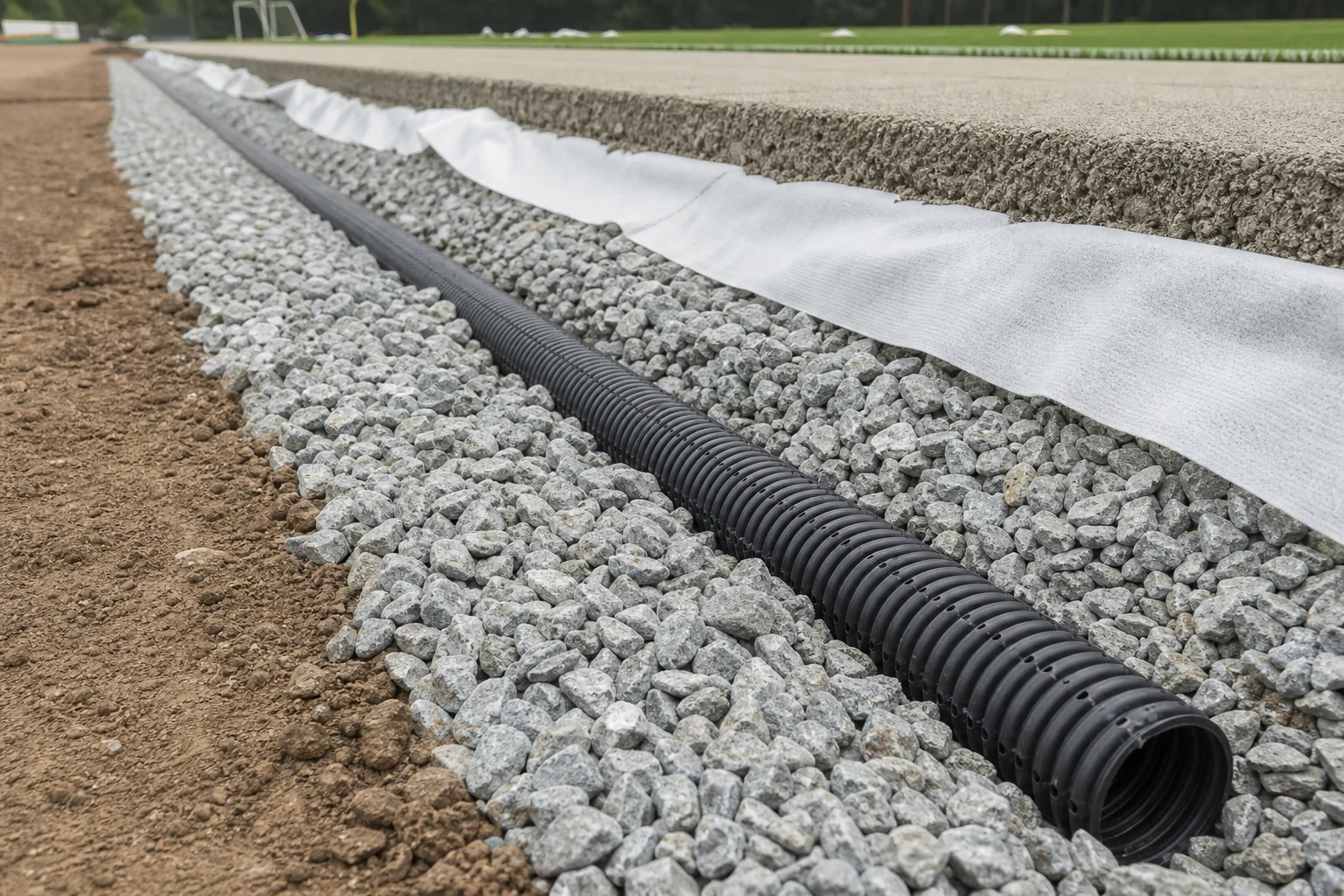
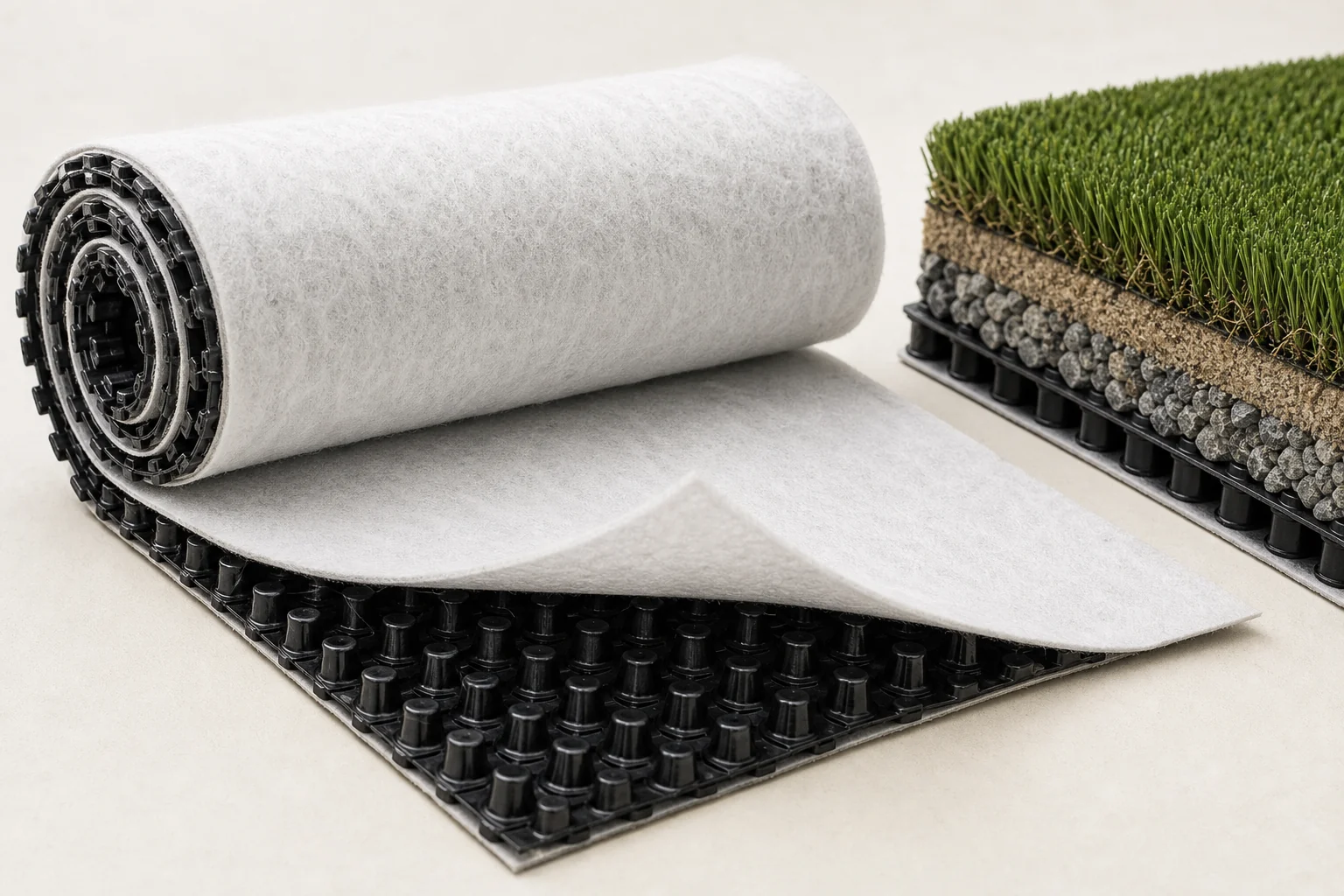
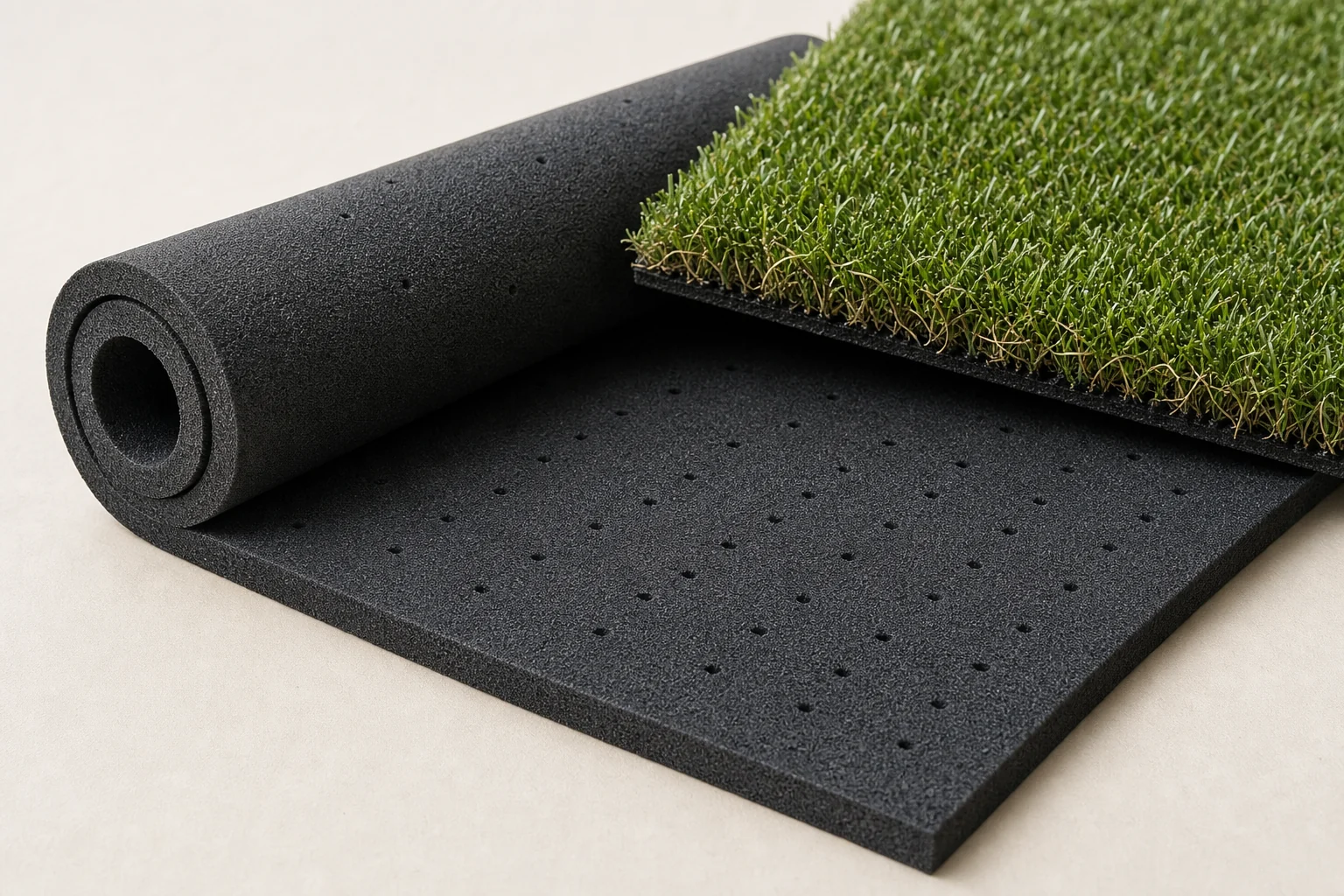
Geotextile Filter and Separation Fabric
Review geotextile selection alongside soil grading, water flow and the overlying fill conditions.
Geotextile Filter and Separation Fabric is a nonwoven geotextile used in compatible artificial-turf sub-base systems to limit migration of fine soil particles into aggregate, reduce intermixing between layers and permit water passage. Selection must not rely on mass per unit area alone: tensile and puncture resistance, characteristic opening size, water permeability, thickness, roll dimensions, temporary UV exposure, overlaps and joint details, and the soil grading require review together. The fabric does not by itself strengthen a weak formation or replace drainage design. The appropriate product class, placement direction and method for placing the overlying fill are defined from geotechnical and drainage conditions.
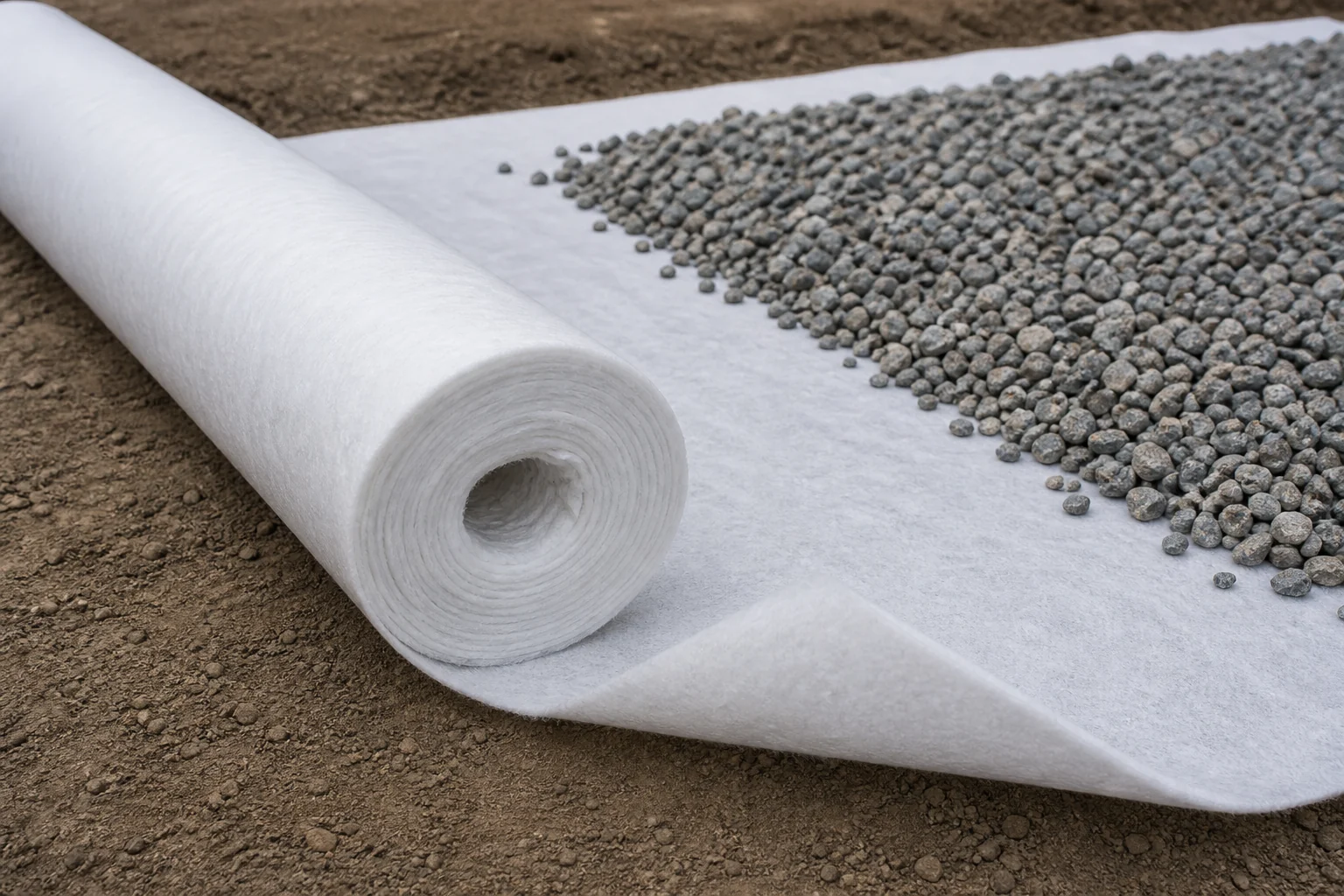
Technical Documents for Geotextile Selection
Review characteristic opening size, water permeability, tensile and puncture data alongside mass per unit area in the technical data sheet. Match product class and test conditions to ground characteristics, drainage needs and installation method.
Placement and Joint Details
Include ground information, a dimensioned area plan and the layer section in your enquiry. Explain roll layout, overlaps, edge returns and overlying fill placement in the installation plan, and complete continuity and damage checks before covering.
Product and surface system questions
How are service life and warranty terms determined?
Service life depends on the selected product, usage intensity, climate, installation and maintenance. Request the written warranty duration and scope using the product code. This page does not promise a common service life or UV warranty for every product.
What evidence is needed for use in a children’s play area?
Suitability cannot be established from the turf appearance or product name alone. Intended use, the base, any impact-absorbing layer and infill must be assessed together. Request relevant test reports by product and system code; do not assume safety or compliance before the report scope is verified.
How is drainage assessed in wet conditions?
Drainage must be assessed using the selected surface’s water permeability together with the sub-base, slope and drainage outlets. Share the project location and existing base details to request the product datasheet and installation requirements. No universal promise of no ponding or a fixed drainage rate is made.