How AI and ERP Improve Construction Field Operations
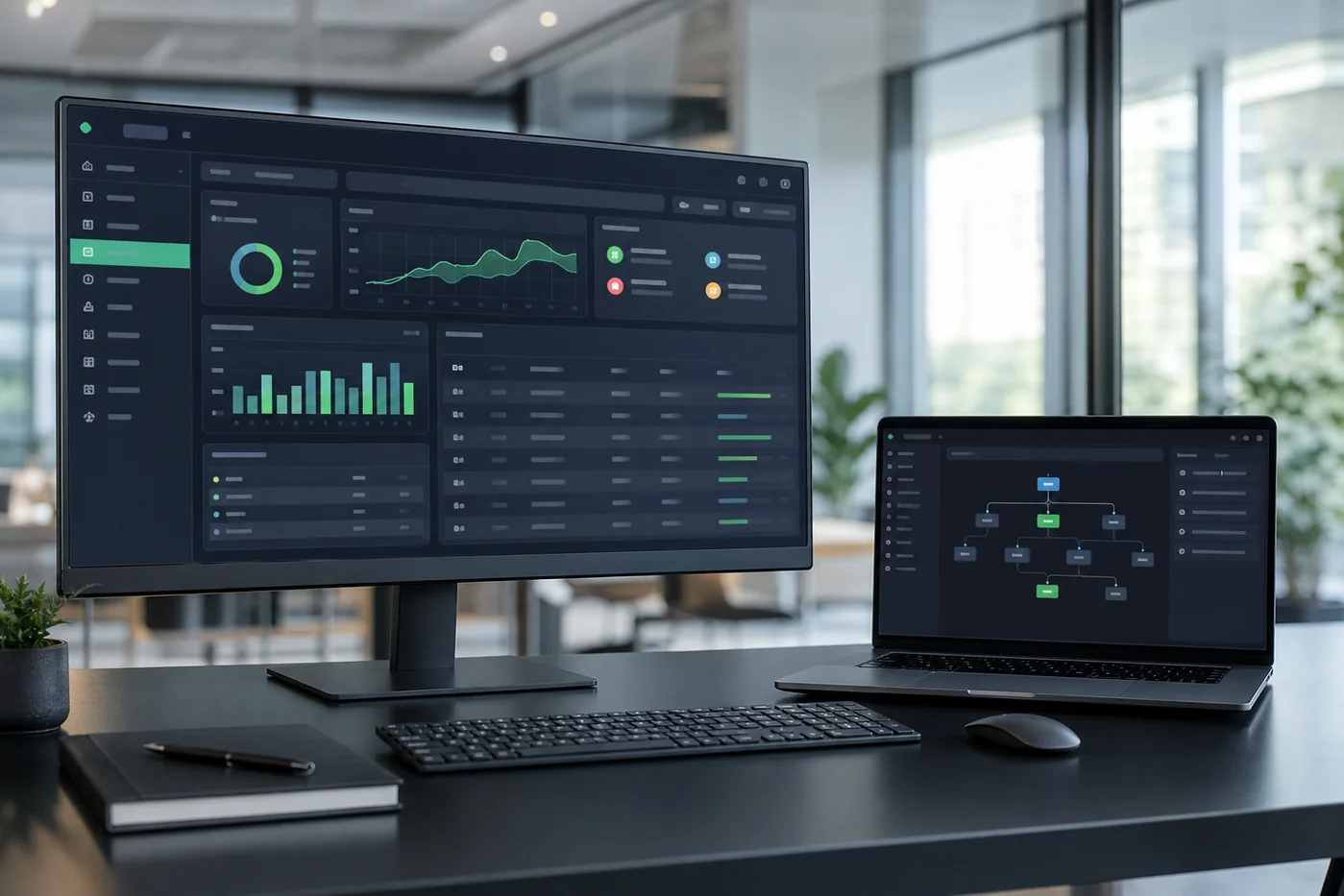
Connect daily reports, procurement, progress, quality, cost and site photographs in one controlled ERP and AI workflow.
Construction data is often scattered across messaging apps, spreadsheets, email and personal notes. The main problem is not a lack of data, but the failure to turn it into timely decisions. ERP and AI can connect field records with schedule, cost, quality and procurement while preserving human approval.
Build one data structure first
AI cannot repair inconsistent operations by itself. Project, location, work package, activity, supplier, material and cost codes should be standardised. Mobile forms should reduce uncontrolled free text and automatically record date, responsible person, location and photographs.
Automate the daily report
Labour, equipment, completed work, weather, constraints and photographs can be captured from the field. AI can summarise these records, identify missing fields and flag contradictions with previous reports. Final approval should remain with authorised site staff.
Create schedule and progress warnings
When planned quantity, installed quantity and remaining duration are evaluated together, productivity deviation becomes visible early. The system can calculate the daily output required to meet a milestone and compare it with actual team capacity.
Connect procurement and logistics
Site demand, approved materials, purchase requests, orders, production, shipment and receipt should form one chain. AI can prioritise late approvals, missing certificates and stock risks inferred from consumption. This is particularly valuable across Türkiye, Gulf and international project routes.
Use photographs as controlled evidence
Image analysis can support the detection of recurring defects or missing safety controls. Results depend on angle, light and context, so the system should refer high-risk records to a specialist rather than issue an automatic rejection.
Measure business impact
- Daily report completion rate
- Approval and procurement cycle time
- Time gained through earlier schedule warnings
- Recurring quality defect rate
- Work hours lost because of stock shortages
- Difference between forecast and final cost
A practical rollout starts with daily reporting and task management, then connects procurement, stock, payment and budget. Predictive models and image analysis should follow only after the core data becomes reliable. Explore RHB technology solutions or contact us for a pilot workflow.